[Texto disponível apenas em inglês] Joshua Davis is an American artist, designer and programmer whose pioneering experiments with code and generative systems have had a significant influence on the development of digital art, graphic design and web culture.
Originally trained as an illustrator and painter, Davis began exploring HTML while studying at Pratt Institute in New York in 1995. He soon moved towards Macromedia Flash and its early scripting languages, eventually using ActionScript not simply to animate predetermined compositions, but to construct systems capable of generating visual outcomes through code.
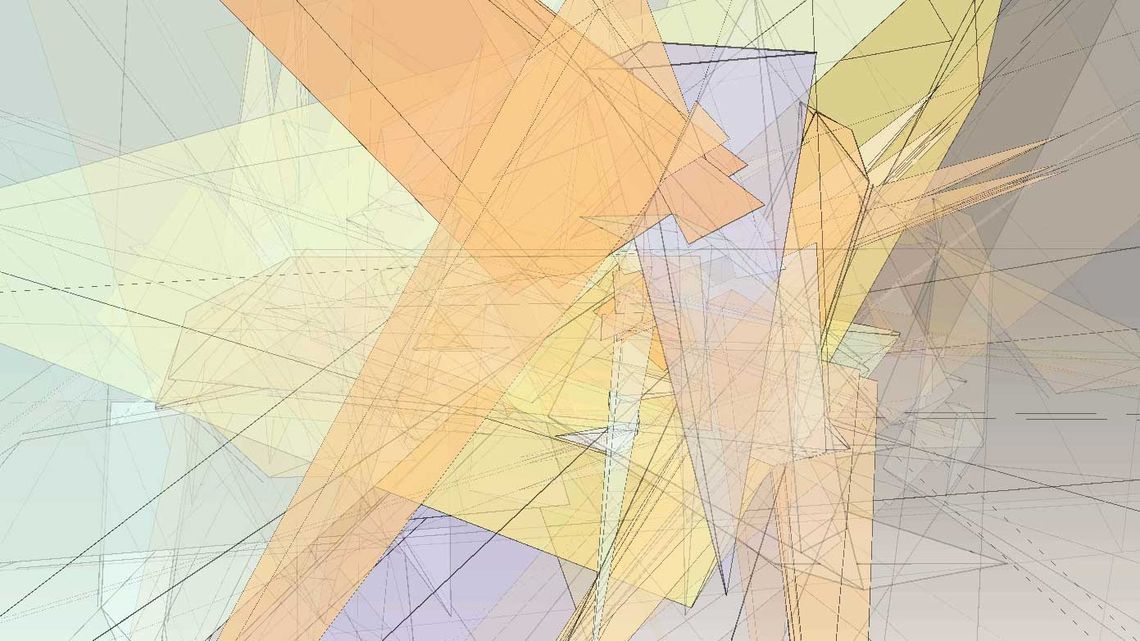
Central to his practice is the use of controlled randomness. Davis develops sets of rules within which colours, forms, images and graphic elements can combine and reorganise themselves, allowing unexpected compositions to emerge from a structure established by the artist. This approach shifts the act of creation from designing a single image towards designing the system through which potentially countless images can be produced.
Between 1998 and 2001, Davis worked with the influential New York web production company Kioken, during a period of intense experimentation surrounding Flash and the emerging visual culture of the web. His work became closely associated with the aesthetics of the Y2K-era Internet, while distinguishing itself through an increasingly systematic exploration of computation, randomness and generative design.
In 2002, together with developer Branden Hall, he founded The Department of Notation Studios, extending his experiments with programming and visual communication. Over the following years, Davis presented his work and research internationally through exhibitions, lectures and workshops at contexts including SIGGRAPH, Flash Forward, OFFF, BD4D and numerous design and digital culture events.
Across more than two decades of practice, Davis has continued to investigate the relationship between code, composition and unpredictability, working across generative systems, graphic design, typography, image-making and computational processes. His influence extends from the experimental web culture of the late 1990s and early 2000s to contemporary practices of generative and algorithmic art.
Rather than using the computer simply as a tool for executing an image already conceived by the artist, Davis approaches code as an active component of the creative process: a framework in which rules, randomness and computation continuously negotiate the final form of the work.